
Nantucketers Call for Action on Housing Bank Legislation
(Sept. 11, 2025) This month, efforts continued to advance legislation creating a Housing Bank, a tool designed to generate reliable, local funding for workforce housing.
For years, Nantucket has struggled to retain the very people who keep the island running: teachers, first responders, and essential service workers. Too often, they are forced to juggle unstable rental arrangements, move frequently, or leave the island altogether. A Housing Bank would help address these challenges by establishing a steady, community-based funding stream for year-round housing initiatives.
Under the current proposal, the Housing Bank would be funded through a half-percent transfer fee on the portion of real estate sales above $2 million, paid by the seller. Local leaders estimate this fee could generate several million dollars annually, with all funds remaining on Nantucket to support housing solutions, from preserving existing year-round homes to developing new rental and ownership opportunities for island workers. Supporters point to the success of the Nantucket Land Bank as proof the model can work. Just as the Land Bank has preserved open space for generations, the Housing Bank could ensure that housing remains accessible for those who sustain island life.
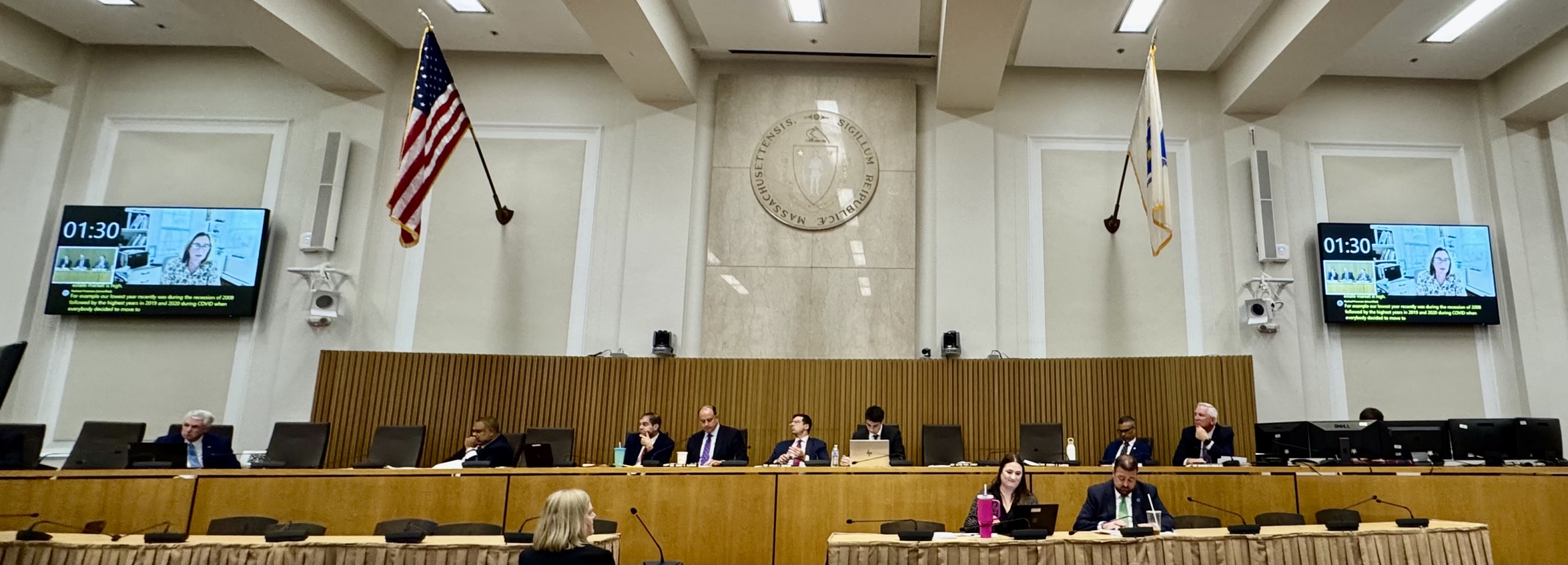
Last week, twelve islanders testified before the Joint Committee on Revenue. Five testified in person, pictured above from left to right are Penny Dey (local real estate agent, Affordable Housing Trust Vice Chair and Housing Authority Chair), Mary Bergman (Executive Director of the Nantucket Preservation Trust and homeowner within the island’s parallel real estate market), Kristie Ferrantella (Municipal Housing Director), Berta Scott (homeowner in the island’s parallel real estate market), and Anne Kuszpa (Executive Director of Housing Nantucket). They were joined by Sen. Julian Cyr, Police Chief Jody Kasper, School Superintendent Elizabeth Hallett, Select Board Member and Nourish Nantucket Board President Brooke Mohr, Land Bank Executive Director Rachel Freeman, homeowners Forest Bell and Abby De Molina, and multi-generational island native Venessa Moore, who testified online.
The Housing Bank has enjoyed broad local support since it was first proposed in the early 2000s, but requires state approval, and similar efforts have faced delays. Nantucket’s state delegation, including Sen. Julian Cyr and Rep. Thomas Moakley, who filed the bill this session, continue to champion the measure, urging colleagues in the Legislature to give communities like Nantucket the tools they need to confront housing challenges head-on.
The Road Ahead
Although this news marks positive progress, several steps remain before the governor can give the legislation final approval.
The bill will continue to move through the Massachusetts House of Representatives, where it is read, reviewed by committees, and debated. After three readings and a vote to engross, the bill is transmitted to the Senate, which follows the same process. If the two chambers pass different versions, a conference committee will reconcile them and return a final bill to both chambers for enactment.
Once both chambers enact identical language, the bill is sent to the governor, who may sign it into law, veto it, or allow it to become law without a signature.
This process can take months or even years. Still, we remain hopeful that lawmakers will hear the voices of those who live with this housing crisis every day and enact the change needed to make a lasting difference.
Why It Matters for Housing Nantucket
For Housing Nantucket, a dedicated funding source like the Housing Bank could be transformative. It would provide long-term stability, allowing us to plan more effectively, expand our programs, and better serve the hundreds of families who rely on our mission to build a parallel real estate market for the island’s workforce.



 Josh Qualls, Office of Governor Healey